How to Build a Local SEO Strategy for San Diego Business
Learn how San Diego businesses build a winning local SEO strategy with Google Business Profile optimization, reviews, citations, and on-site fixes.
A winning local SEO strategy for a San Diego business starts with a fully optimized Google Business Profile, backed by consistent business information across the web, a steady stream of genuine reviews, and a website that reinforces your local relevance. None of these pieces work well in isolation. Together, they tell Google that your business is real, active, and the right match for someone searching nearby.
This guide walks through each piece in order of impact, starting with Google Business Profile because it is the single highest-leverage asset most local businesses have and the one most owners neglect. By the end, you will have a clear, practical plan you can start on this week, whether you handle it yourself or hand it off to a team.
What Is Local SEO, and Why Does It Matter in San Diego?
Local SEO is the set of practices that help your business show up when someone nearby searches for what you sell, whether that is "plumber near me," "smog check San Diego," or "birria tacos." It covers your Google Business Profile, your website's local relevance, your online reviews, and the accuracy of your business information across directories.
San Diego is a competitive market with dense pockets of similar businesses fighting for the same map results, from Pacific Beach restaurants to Kearny Mesa auto shops to contractors serving the whole county. In a market like this, being technically correct is not enough. You need every signal Google looks at to point in the same direction: this business is legitimate, active, and relevant to this search.
The businesses that win the map pack consistently are rarely the ones spending the most. They are the ones doing the fundamentals correctly and consistently, month after month.
Is Your Google Business Profile Doing Its Job?
Your Google Business Profile (formerly Google My Business) is the listing that shows up in Google Maps and in the local map pack above organic results. For most local businesses, it drives more calls, direction requests, and website clicks than any single page on their own site.
Yet in the accounts we manage, we consistently find profiles that are only half filled out, categorized incorrectly, or abandoned after the initial setup. Fixing this is often the fastest local SEO win available to a business.
Complete Every Field Google Gives You
Google rewards profiles that give it complete, structured information because that information makes the listing more useful to searchers. At minimum, your profile should include:
- Your exact business name, matching your signage and legal name (no keyword stuffing)
- A primary category that matches your core service, plus relevant secondary categories
- Accurate hours, including holiday hours
- A local phone number and your website URL
- A full, keyword-relevant business description
- Services or products listed with descriptions
- The service area, if you travel to customers rather than operate from a storefront
For a field-by-field walkthrough of every setting Google offers, our Google Business Profile optimization checklist covers each one in detail.
Photos, Posts, and the Q&A Section
Profiles with regular activity tend to perform better than static ones, and photos are the easiest activity to maintain. Upload real photos of your team, your location, and your work on a regular basis rather than relying only on the handful uploaded at setup.
Google Posts let you share updates, offers, and events directly on your profile. They are not a major ranking factor on their own, but they keep your profile active and give searchers a reason to choose you over a competitor whose profile looks abandoned. The Q&A section is also worth monitoring. If it sits empty, seed it with two or three questions customers actually ask, and answer them yourself.
GBP QUICK AUDIT
- Business name matches signage
- Keyword-stuffed business name
- Category matches core service
- Generic or unrelated category chosen
- Photos and Posts added weekly
- Profile untouched for months
This kind of audit takes ten minutes and catches the mistakes that quietly hold a profile back. A keyword-stuffed name, for instance, can actually violate Google's guidelines and put your listing at risk of suspension, which does far more damage than the ranking boost it might have offered.
The pattern across most of these fixes is consistency. A profile that is complete once but never touched again slowly falls behind competitors who post, respond, and update on an ongoing basis. This is the reason local SEO is a maintenance activity, not a one-time setup task.
How Much Do Reviews Really Affect Local Rankings?
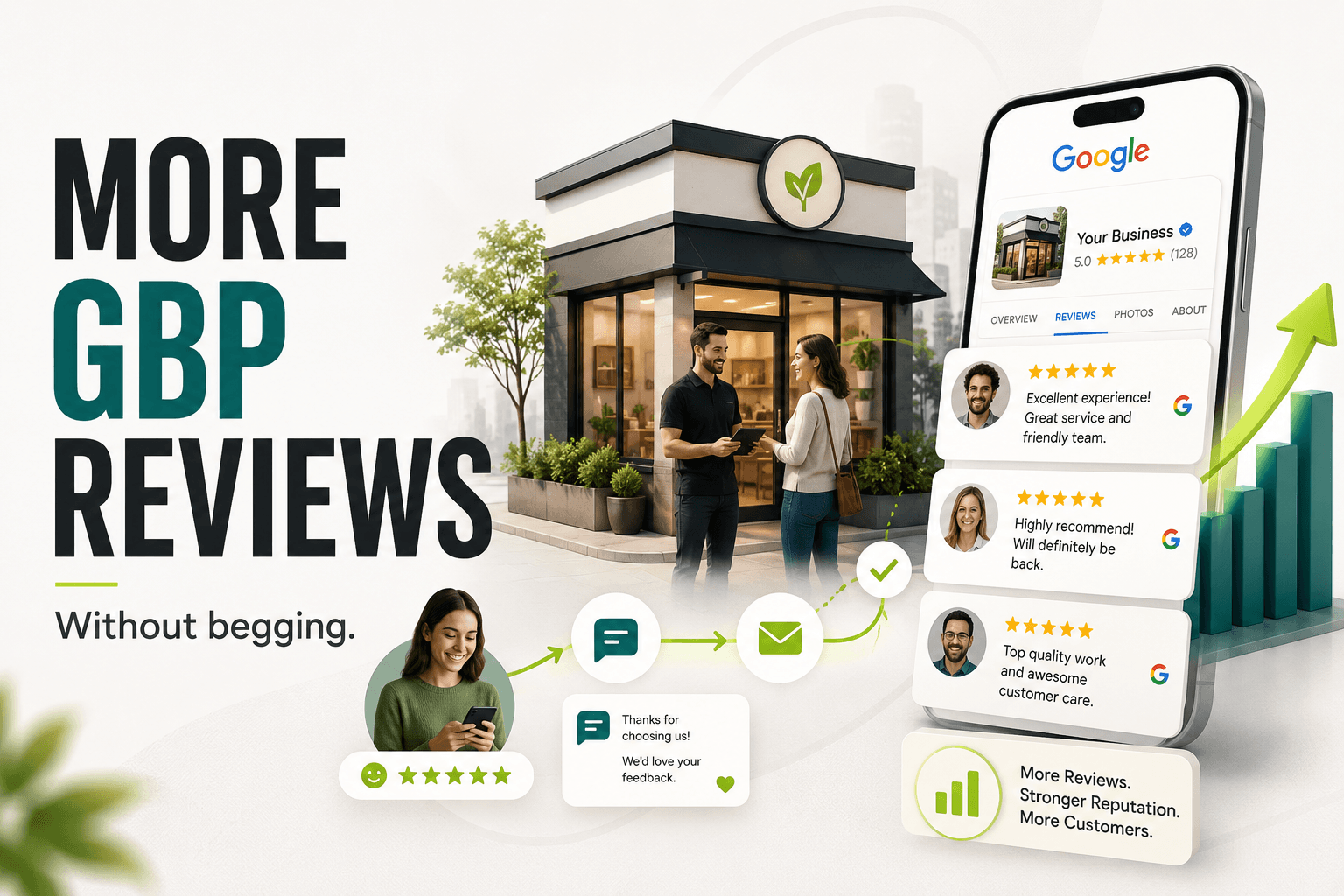
Google has stated publicly that review quantity and quality are factors in local ranking, alongside the relevance and completeness of your profile. Beyond rankings, reviews directly influence whether someone calls you or clicks a competitor instead. A profile with 4 reviews next to one with 140 rarely gets the benefit of the doubt.
A sustainable review strategy has three parts:
- Ask every satisfied customer directly, ideally right after the job is done or the sale is complete
- Make it easy with a direct review link, sent by text or email
- Respond to every review, positive and negative, in a professional and specific tone
Responding to negative reviews matters more than most owners think. A thoughtful, calm response shows future customers how you handle problems, and it often matters more to them than the negative review itself.
Are Your Citations and Business Information Consistent?
A citation is any online mention of your business name, address, and phone number, commonly called NAP. These appear on directories like Yelp, Apple Maps, Bing Places, and industry-specific listing sites. Google uses this network of mentions as a trust signal. When your NAP data matches everywhere, it reinforces that your business information is accurate. When it does not, it creates doubt.
The most common problems we see are old addresses left live on directories after a move, phone numbers that were swapped for call tracking and never corrected everywhere, and duplicate listings created by past agencies or automated tools. Each of these dilutes the trust signal Google is trying to read.
A basic citation cleanup involves:
- Searching your business name and old address to find outdated or duplicate listings
- Claiming and correcting your top directory profiles (Yelp, Apple Maps, Bing Places, Facebook)
- Checking industry-specific directories relevant to your trade
- Standardizing exactly how your name, address, and phone number are formatted everywhere
Does Your Website Support Your Local SEO Efforts?
Google Business Profile gets a business found on the map. Your website is what convinces a searcher to actually call, book, or visit once they click through. If the site loads slowly or lacks the content that confirms you serve their area, the profile's hard work goes to waste.
Local relevance on your website comes from a few specific elements: a city or neighborhood mentioned naturally in your page titles and copy, a dedicated page for each service area if you cover multiple cities, and schema markup that tells search engines your address and service area in a structured format. Site speed matters too. If your pages load slowly, slow load times quietly cost you leads before a visitor ever sees your phone number.
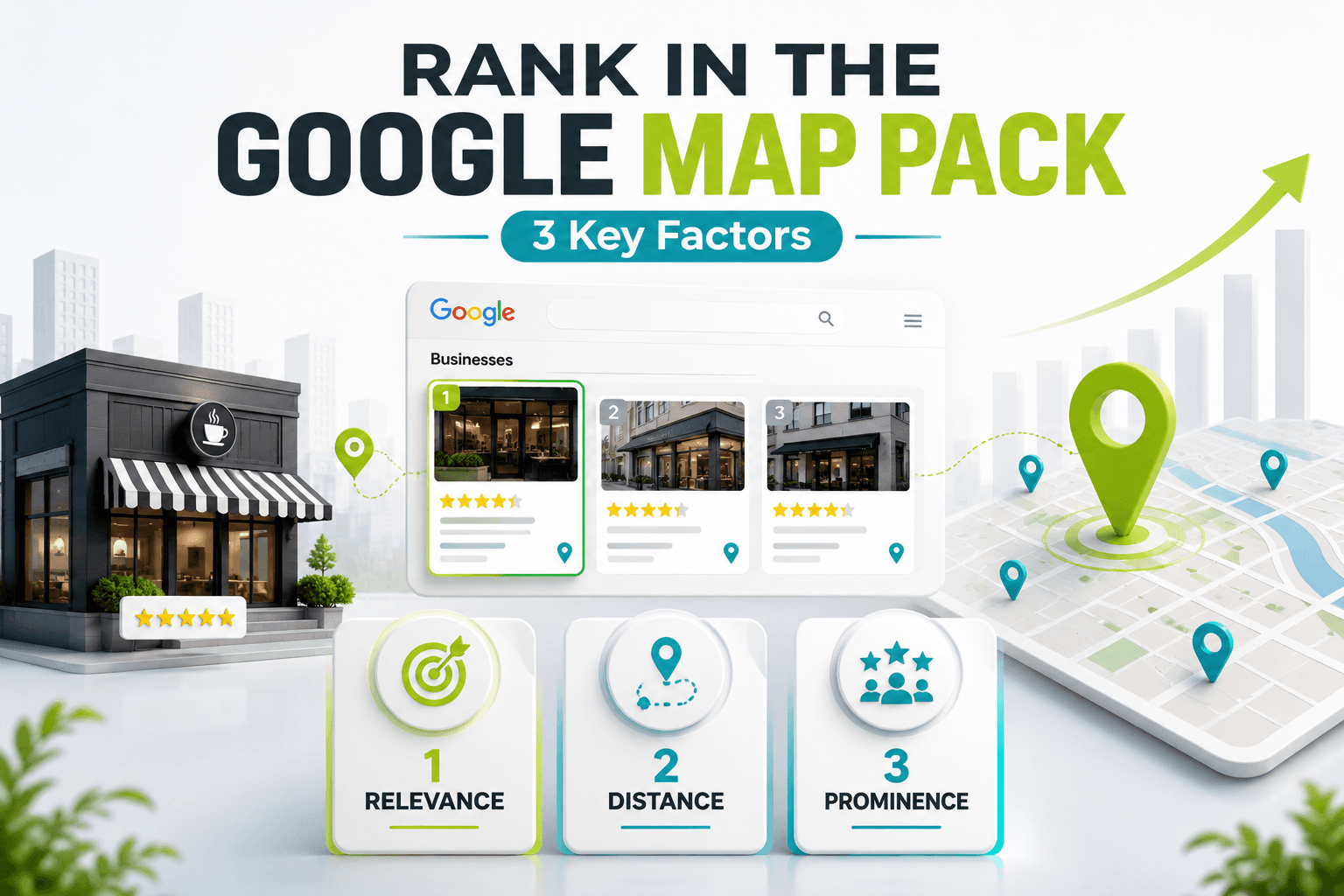
Google's own documentation describes three factors behind local ranking: relevance, distance, and prominence. Relevance measures how well your profile and website match what someone searched for. Distance measures how close you are to the searcher or the area they specified. Prominence measures how well-known and well-reviewed your business is, based on signals like links, citations, and reviews.
GOOGLE'S THREE RANKING PILLARS
- RelevanceMatch search intent
- DistanceProximity to searcher
- ProminenceReviews, links, awareness
Distance is the one factor you cannot fully control, since it depends on where the searcher is standing. That is exactly why relevance and prominence deserve most of your attention. A business with a complete profile, strong reviews, and locally relevant content can outrank a closer competitor who has neglected all three.
This is also where local SEO and broader organic SEO overlap. A local SEO plan handles the Google Business Profile and citation work described above, while a full SEO strategy builds out the website content, backlinks, and technical foundation that support it. Businesses with multiple locations or a wider service area usually need both working together.
What Does a Realistic Local SEO Rollout Look Like?
Local SEO rewards consistency more than intensity. A business that makes steady, correct moves over three months will typically outperform one that does a single intense push and then stops. Here is a general sequence that works for most San Diego small businesses.
90-DAY LOCAL SEO ROLLOUT
- Audit and FoundationWEEKS 1-2
- Content and CitationsWEEKS 3-6
- Reviews and EngagementWEEKS 7-10
- Measure and RefineWEEKS 11-12
In practice, the first two weeks matter most. If your profile categories, NAP data, and basic completeness are wrong, everything built on top of that foundation performs worse than it should. Get the foundation right first, then layer on content, reviews, and measurement.
Results compound. Magnolia Smog Check paired a fully optimized local presence with targeted Google Ads and converted 40 to 45 percent of ad traffic while tripling its customer volume. Belcrete Concrete Services saw its conversion rate climb from 0 percent to 20 to 30 percent after tightening its targeting and local relevance. Neither result came from a single tactic. Both came from the fundamentals being handled correctly and consistently over time. You can read the Magnolia Smog Check case study and the Belcrete Concrete case study for the full details.
Where Does AI Search Fit Into Local SEO Now?
Search behavior is shifting as more people ask AI tools like ChatGPT, Perplexity, and Google's AI Overviews for local recommendations instead of typing a traditional search. These tools tend to pull from the same underlying signals as traditional local SEO: business listings, reviews, and structured, well-organized website content. A business with a clean, complete Google Business Profile and consistent citations is already positioned well for this shift. If you want to go deeper on that overlap, our guide on getting cited by ChatGPT, Perplexity, and Google AI covers it in detail.
Key Takeaways and Your Next Steps
A winning local SEO strategy for a San Diego business rests on four pillars: a complete and active Google Business Profile, a steady stream of genuine reviews, consistent business information across the web, and a website that reinforces your local relevance and loads quickly. None of these require a large budget. They require consistency.
This week, you can realistically:
- Log into your Google Business Profile and check that your category, hours, name, and description are complete and accurate
- Search your business name and old address online to find any outdated or duplicate listings
- Send a review request link to three recent customers
- Upload five new, real photos of your business, team, or work
- Check your homepage load time and confirm your city or service area is mentioned naturally in your page titles
These five steps alone will move most businesses ahead of local competitors who have never touched their profile since setting it up. If you get through them and want a second set of eyes, or you would simply rather have the ongoing profile management, citation cleanup, and review outreach handled for you, we offer a free SEO audit and a Local SEO plan starting at $500 a month that covers exactly this work on an ongoing basis. You can also see our full pricing overview or book a call if you want to talk through where your business stands today.