Best Google Business Profile Category for Roofers
Confused about which Google Business Profile category fits your roofing company? Here's the correct primary category, smart secondary picks, and mistakes to avoid.
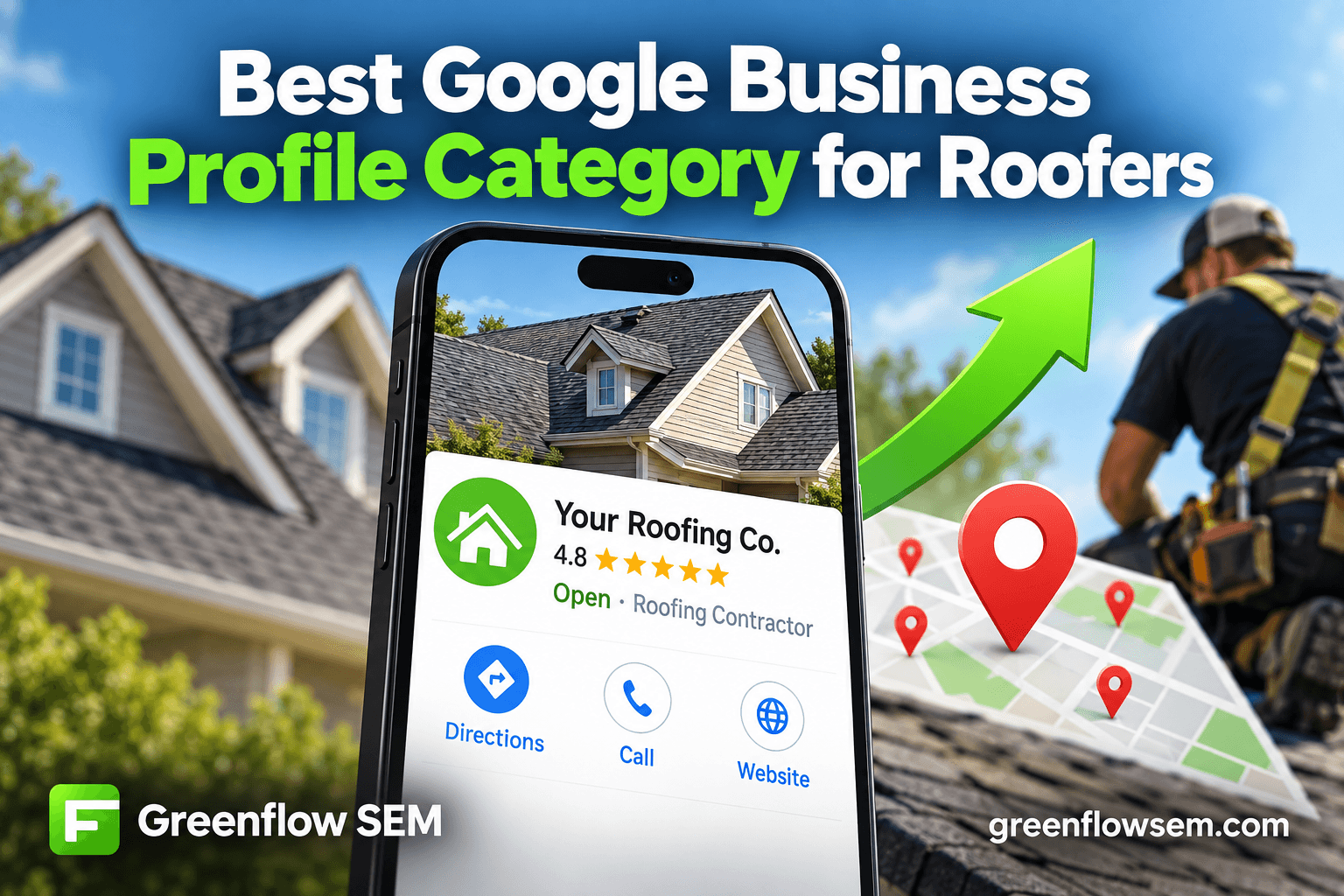
The correct primary Google Business Profile category for almost every roofing company is "Roofing contractor." This is the category Google built specifically for the trade, and it's the one that triggers the right map pack behavior, the right services section, and the right review prompts for roofing searches.
Some roofers overthink this choice and pick something broader, like "General contractor" or "Home improvement store," thinking it casts a wider net. It usually does the opposite. Google's local algorithm leans heavily on category to decide which businesses deserve to show up for a given search, so a vague or mismatched category can quietly cost you map pack visibility for months.
Why Your Category Choice Carries So Much Weight
Google Business Profile categories aren't just labels for organizing directories. They tell Google's local ranking system what your business does, which searches you're eligible to appear in, and which features show up on your profile, things like the Services menu, booking links, and attribute options.
Category is one of the three core local ranking factors Google has confirmed matter for map pack placement, alongside proximity and prominence. We cover all three in detail in How to Rank in the Google Map Pack: 3 Factors, but category deserves its own conversation because it's the single setting business owners get wrong most often.
Here's the practical effect: if your primary category doesn't match what a searcher typed, Google may rank you lower even if your reviews, website, and proximity are strong. A roofer stuck under "General contractor" is competing against painters, remodelers, and handymen for relevance signals that have nothing to do with roofing.
The Right Primary Category for Roofing Contractors
For the vast majority of roofing businesses, the primary category should simply be:
- Roofing contractor — the standard category for installation, repair, replacement, and inspection work
This applies whether you do asphalt shingles, tile, metal, or flat roofing, and whether your jobs are mostly insurance-driven repairs or full tear-offs and replacements. Google doesn't have separate primary categories for each roofing material or method, so "Roofing contractor" is the catch-all and the correct one.
What About Specialty Roofers?
Some businesses operate in a narrower niche and wonder if a more specific category fits better. In most cases, it doesn't, because Google's category list is more limited than people expect. A few scenarios worth addressing directly:
- Commercial-only roofers: there is no separate "commercial roofing contractor" category. Stay with "Roofing contractor" and use your business description, services list, and photos to signal commercial focus.
- Roof repair specialists: "Roof repair contractor" exists as a category, but it's best used as a secondary category alongside "Roofing contractor," not instead of it, unless repair work is genuinely 100% of your business.
- Roof inspection or consulting firms that don't perform physical roofing work: these businesses sometimes fit better under a different category entirely, but this is rare and should only apply if no installation or repair work happens at all.
CATEGORY BY ROOFING FOCUS
- Residential reroofs and repairsRoofing contractor
- New construction roof installsRoofing contractor
- Commercial flat roofingRoofing contractor
- Storm and insurance claim repairsRoofing contractor
- Roof plus gutter installationRoofing contractor
PRIMARY CATEGORY STAYS CONSISTENT ACROSS SPECIALTIES
The pattern here is intentional. Google rewards consistency between what you call yourself and what people search for. Searchers type "roofer near me" or "roofing company," not "commercial flat roof specialist," so the primary category should match the broad, high-volume search intent while your Google Business Profile description and services section handle the specifics.
This is also why we tell clients not to chase a perfect niche category. Google's local search algorithm pulls additional relevance signals from your business description, your posts, your photos, and especially your services list and reviews. The category sets the broad lane. Everything else fine-tunes it.
Which Secondary Categories Should You Add?
Google allows one primary category plus up to nine secondary categories. Secondary categories don't carry the same ranking weight as the primary one, but they do help Google understand the full scope of your services, and they can make you eligible for additional relevant searches.
For most roofing companies, a reasonable secondary category list includes only the services you actually perform and advertise:
- Roof repair contractor (if repairs are a meaningful part of your business beyond general roofing work)
- Gutter installation service (only if you install gutters as a real service line)
- Siding contractor (only if siding work is genuinely offered)
- Insulation contractor (for roofers who also handle attic insulation)
- Solar energy contractor (only for companies that install solar alongside roofing)
The rule of thumb: every secondary category should reflect a service a customer could actually book with you today. Adding categories for services you don't truly offer violates Google's guidelines and can trigger a suspension or re-verification request if flagged.
Common Category Mistakes That Hurt Roofers' Rankings
In the accounts we manage, category issues are one of the most common and easiest to fix problems we find during a Google Business Profile audit. A few patterns show up repeatedly.
CATEGORY SETUP CHECK
- Primary category set to Roofing contractorMatches core search intent
- Secondary categories match real servicesGutters, siding, insulation if offered
- Business description reinforces the categoryMentions roofing specialties clearly
- Primary category set to General contractorToo broad, dilutes roofing relevance
- Category list padded with unrelated servicesCan trigger a Google review flag
- Category never revisited after services changedProfile drifts out of date
The most expensive mistake on this list is the general contractor trap. Some roofers set it as their primary category because they also do minor remodeling or exterior work, or because a web developer set up the profile years ago without roofing-specific guidance. The fix is simple: change the primary category to "Roofing contractor" and move "General contractor" to a secondary slot if it still applies to part of your business.
Padding the category list is the second common issue. Adding categories like "Handyman" or "Construction company" just to appear in more searches tends to backfire. Google's algorithm uses category combinations to understand your business, and an unfocused mix can make your profile look less authoritative for roofing searches specifically, not more visible overall.
How to Audit and Update Your Category This Week
Checking and correcting your category takes about ten minutes once you know where to look. The change itself is instant, though it can take Google a few days to weeks to reflect any ranking impact in the map pack.
CATEGORY AUDIT PROCESS
- Open your profileDAY 1
- Review current categoriesDAY 1
- Set Roofing contractor as primaryDAY 1
- Add true secondary categoriesDAY 1
- Watch map pack positionWEEKS 2-4
While you're in there, it's worth reviewing the rest of your profile at the same time. Category, business description, services list, photos, and review volume all work together to signal relevance. Our Google Business Profile optimization checklist walks through each of those elements if you want to do a full pass rather than just the category fix.
How Category Choice Connects to Broader Map Pack Rankings
Category is a foundational setting, but it's one input among several. Proximity to the searcher and prominence, which includes review volume, review quality, citation consistency, and website relevance, also carry significant weight. A roofing contractor with the right category but thin reviews will still struggle against a competitor with strong reviews and consistent local citations.
If reviews are the gap in your profile, How to Get More Google Reviews (No Begging) covers practical, policy-safe ways to build review volume without pressuring customers. And if you want ongoing management of the map pack specifically, rather than a one-time fix, What a Map Pack Optimization Service Includes explains what that kind of work typically covers month to month.
It's also worth remembering that category and the rest of local SEO aren't a one-time setup. Google periodically adds new categories, your service mix may change, and competitors are making their own profile adjustments constantly. Businesses that treat their Google Business Profile as an ongoing asset, reviewed and updated regularly, tend to hold map pack positions longer than those that set it once and forget it. Our Local SEO services explained month by month breaks down what that ongoing maintenance actually looks like.
Key Takeaways and Your Next Steps
The primary category for nearly every roofing business should be "Roofing contractor," regardless of whether you focus on residential, commercial, repair, or replacement work. Secondary categories should reflect real additional services, like gutters, siding, or insulation, never padding meant to catch extra search traffic. Getting this setting right is foundational to map pack visibility, but it works alongside reviews, citations, and website relevance, not instead of them.
This week, log into your Google Business Profile, confirm your primary category reads "Roofing contractor," remove any mismatched or padded secondary categories, and add only the ones that reflect services you genuinely offer. It's a ten-minute task that removes a real obstacle to showing up in local roofing searches.
If you'd rather have a specialist review your entire profile, not just the category, alongside your citations, reviews, and website's local relevance, that's the kind of audit we run for roofing and home service clients regularly. You can start with a free SEO audit or book a call to talk through what's holding your map pack visibility back.