What a San Diego SEM Agency Does: Ads + SEO
A San Diego SEM agency manages Google Ads and SEO as one coordinated plan, not two separate vendors. Here's how that works and what it costs.
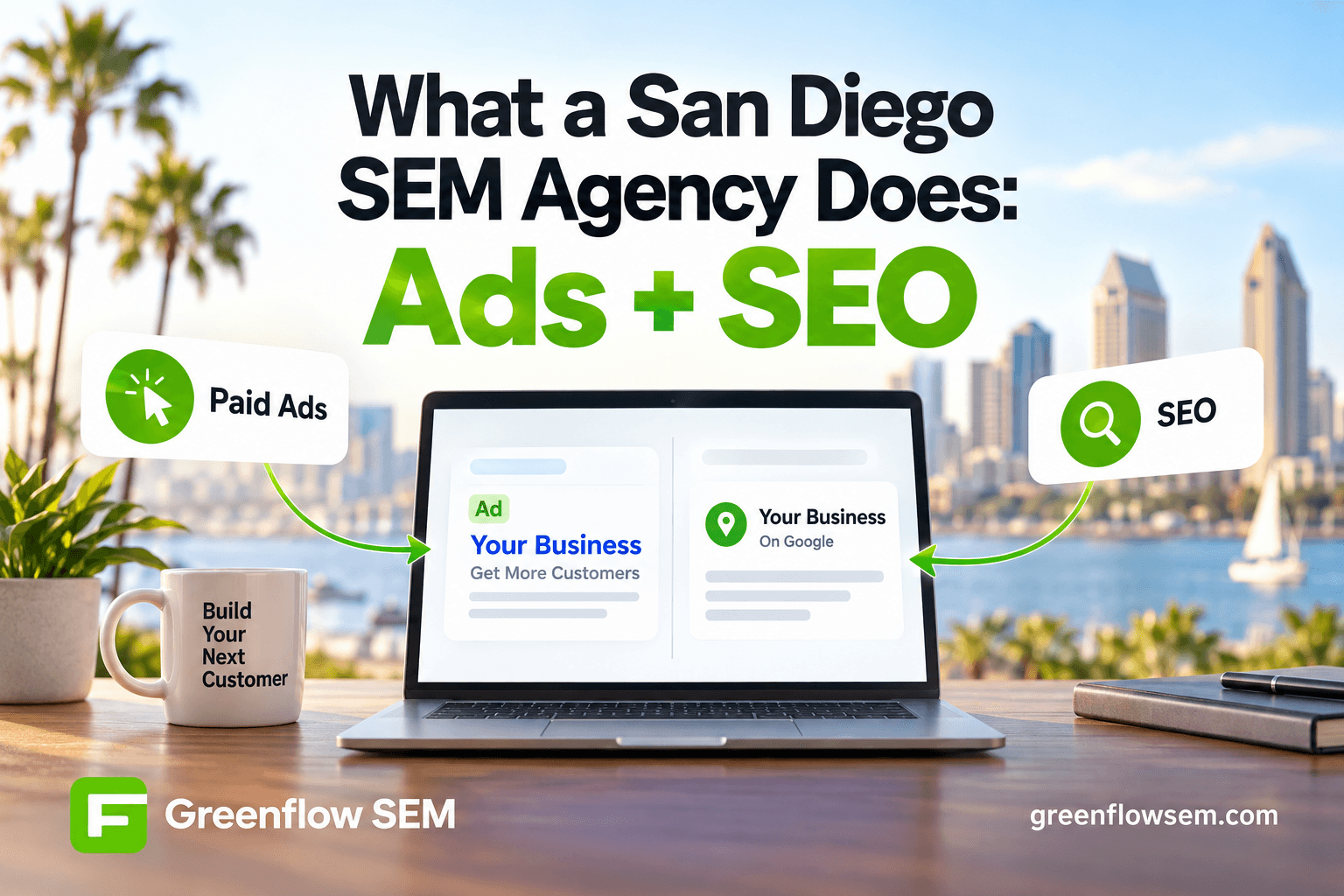
A San Diego SEM agency manages your paid search and organic search as a single coordinated plan rather than two separate services run by two separate people. That means the keyword data from your Google Ads account informs your SEO content, your SEO landing pages feed better Quality Scores back into your ads, and both channels point at the same tracking, the same offers, and the same business goals.
Most businesses hire a PPC freelancer and an SEO company separately, and the two never talk to each other. The result is duplicated keyword research, conflicting landing pages, and nobody accountable for the full picture of how customers actually find the business. Running Google Ads and SEO as one plan fixes that by design.
What Does a San Diego SEM Agency Actually Do?
SEM stands for search engine marketing, and it is really an umbrella term for everything that affects how a business shows up on a search results page, paid and organic. A San Diego SEM agency typically handles:
- Google Ads search, display, and shopping campaigns
- Local Services Ads for pay-per-lead categories where it qualifies
- Search engine optimization for organic rankings
- Local SEO: Google Business Profile, citations, reviews, and map pack visibility
- Conversion tracking so every lead can be traced back to the keyword and channel that produced it
- Landing pages and website improvements that affect both ad Quality Score and organic rankings
The agency's job is not to run ads or write content in isolation. It is to decide, every month, where the next dollar and the next hour of work produce the best return across both channels combined.
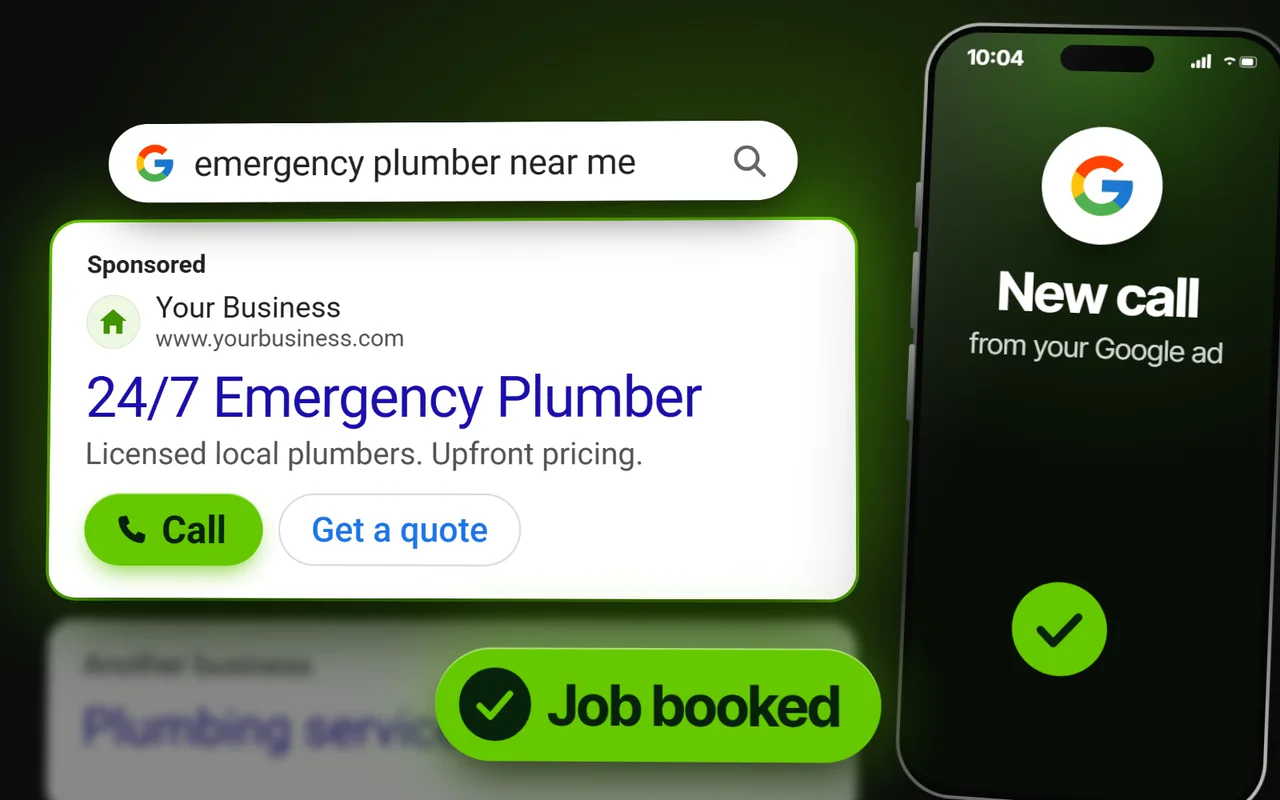
Why Run Google Ads and SEO on One Plan Instead of Two?
Google Ads and SEO pull from the same well. They both start with keyword research. They both depend on landing page quality, page speed, and mobile usability. They both need accurate conversion tracking to know what is working. When one team manages both, that work gets done once and used twice.
The Problem With Separate Vendors
When a PPC freelancer and an SEO company work independently, a few predictable problems show up. The ad campaigns bid on keywords the SEO team is also trying to rank for organically, with no coordination on which keywords deserve paid spend and which can be earned for free over time. The website gets changed by one vendor in ways that break the other vendor's work. And when results slip, each vendor points at the other instead of at the data.
How the channels connect
- Google Ads search termsFeed SEO keyword list
- SEO landing pagesLower Ads cost per click
- Reviews and GBP dataBoost ad trust signals
- Core Web Vitals fixesHelp both channels
- Retargeting audiencesRe-engage organic visitors
This is not a theoretical benefit. In the accounts we manage, the search terms report inside a Google Ads account is one of the best sources of real customer language for SEO content, because it shows exactly what people typed before they clicked. SEO content, in turn, becomes free landing page inventory that improves Quality Score in Google Ads, which directly lowers cost per click. A faster, better-built website improves both the ad Landing Page Experience score and organic rankings at the same time, which is why we treat website speed as a shared asset rather than a separate project.
Local SEO belongs in this same conversation. A strong Google Business Profile with recent reviews does not just help map pack rankings. It also gives paid search ads more credibility when a prospect checks your business before clicking the call button, and it is a factor in whether a Local Services Ad gets approved in the first place.
What Does a Combined Plan Look Like Month to Month?
A combined SEM plan is not a one-time setup. It is an ongoing cycle of launching, measuring, and adjusting both channels against the same goals.
First 90 days of a combined plan
- Audit and setupWeeks 1-2
- LaunchWeeks 3-4
- Optimize and buildMonth 2
- CompoundMonth 3+
The first two weeks matter more than most business owners expect. This is when conversion tracking gets set up correctly, so every phone call, form fill, and chat is attributed to the right source from day one. Skipping this step is one of the most common reasons Google Ads campaigns fail in the first place, because without accurate tracking, nobody can tell which keywords or ads are actually producing customers.
By month two, the keyword and conversion data from the ad account is already shaping which service pages get written or rewritten first. Instead of guessing at content topics, the SEO work targets the exact terms that are already converting in paid search, which shortens the usual guesswork phase of an SEO campaign. Local SEO work runs on its own timeline, typically slower than paid search but with results that compound rather than stop the moment the budget pauses.
What Does a Combined SEM Plan Cost?
Pricing for a combined plan is simply the sum of the channels you run. There is no bundled discount at Greenflow SEM, but there is also no duplicated setup fee, because the keyword research, tracking, and landing page work serve both channels at once.
What each channel costs
- Google Ads ManagementSearch campaigns, tracking, ongoing optimization$700 a month
- SEORankings, content, Local SEO included$700 a month
- Social AdsFacebook and Instagram campaigns$750 a month
- Local Services AdsPay-per-lead management, lead budget billed by Google separately$500 a monthWhere category qualifies
These are management fees, not ad spend. The budget a business sets for Google Ads clicks or Local Services Ads leads is paid directly to Google and is separate from the management fee. For a full breakdown of how much to budget for clicks, see how much a small business should spend on Google Ads. For a deeper look at what drives SEO pricing specifically, see SEO pricing explained, and for Google Ads management pricing across the industry, see Google Ads management pricing.
Local SEO is never sold as a standalone line item. It is included in every SEO plan, because citations, reviews, and Google Business Profile management are part of ranking locally, not an optional add-on. Businesses that want to compare Google Ads against Local Services Ads before committing to either should read that comparison first, since the right starting channel depends heavily on the industry and how competitive the paid search auction already is.
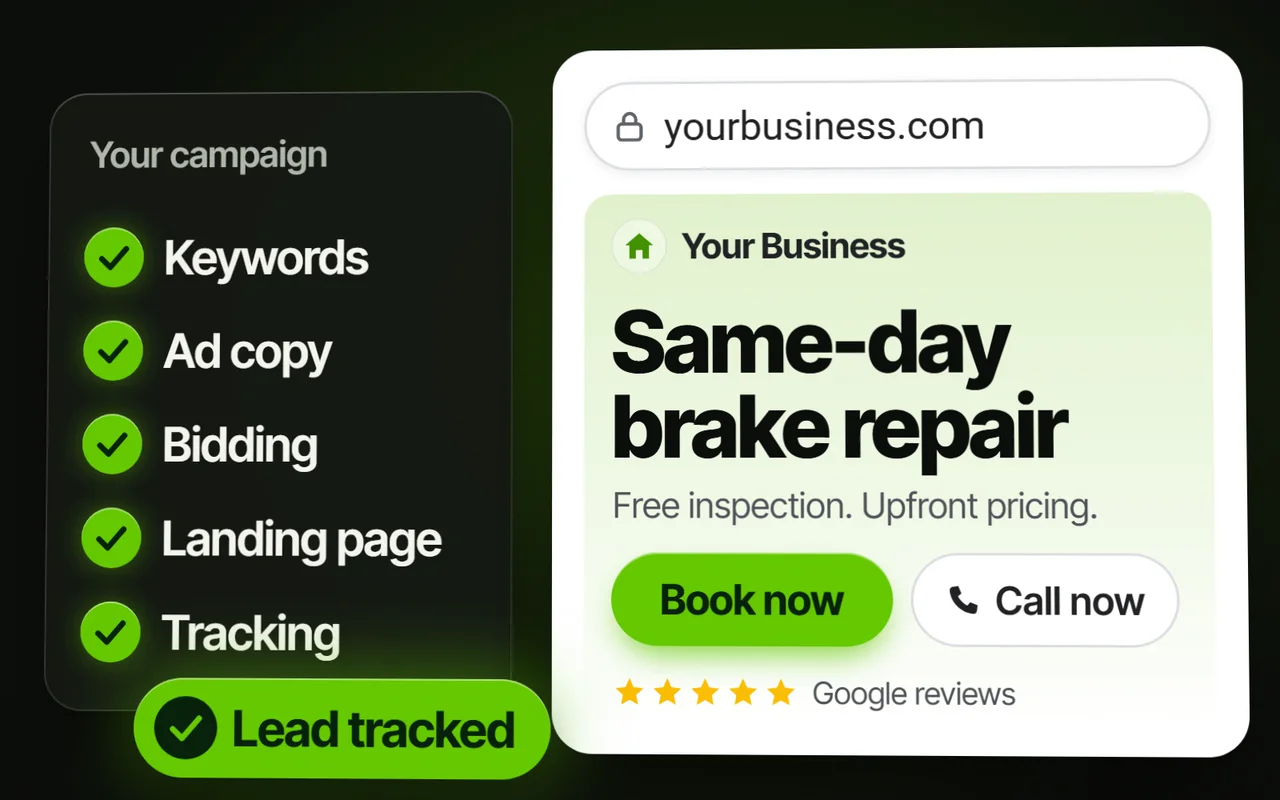
What Results Can You Expect When Ads and SEO Work Together?
Results vary by industry, market, and budget, and we do not promise specific numbers before reviewing an account. What we can share is how combined efforts have played out in accounts we manage.
- SD Food Truck Pros paired a conversion-focused website with managed Google Ads and social campaigns, generating 2,900+ Google Ads conversions, 900+ phone calls, and 1,500+ qualified leads, alongside 5,437 social leads at $7.54 each. See the SD Food Truck Pros case study.
- Belcrete Concrete Services used tightly targeted Google Ads search campaigns and saw cost per click drop more than 50% while conversion rate climbed from 0% to 20-30%. See the Belcrete case study.
- Magnolia Smog Check combined a fully optimized local presence with targeted Google Ads, converting 40-45% of ad traffic and tripling customer volume. See the Magnolia Smog Check case study.
The pattern across these accounts is the same even though the industries are different. Paid search produces fast, trackable leads while the website and local presence are optimized in parallel, which is what pushes conversion rates up and cost per click down over time. Neither channel alone produced that combination. The ads brought volume, and the site and local signals turned more of that volume into booked jobs and calls.
How Do You Know If Your Business Needs Both Channels?
Not every business needs to start with both Google Ads and SEO on day one. Budget, timeline, and competition all factor into the decision.
- If you need leads in the next 30 days, start with Google Ads or Local Services Ads, since SEO takes months to build momentum.
- If your competitors already dominate the map pack and organic results, SEO becomes a longer-term requirement you cannot skip, even while ads run in parallel.
- If your website cannot yet convert visitors into calls or form fills, fix that first. Ads and rankings both lose value if the landing experience is weak, which is why landing pages built for ads outperform sending clicks to a homepage.
- If you operate in multiple San Diego neighborhoods or ZIP codes, both geotargeted ads and local service area pages matter, because each channel reaches a different part of the buying journey.
A business with a tight monthly budget sometimes has to choose one channel first and add the other later. That is a reasonable way to start, as long as the plan accounts for how the two channels will connect once both are running. Starting with SEO and adding ads later, or the reverse, is far less disruptive than running them through two vendors who never compare notes.
Key Takeaways and Next Steps
A San Diego SEM agency manages Google Ads and SEO as one plan because both channels rely on the same keyword research, the same website, and the same conversion tracking. Running them separately means duplicated work at best and conflicting strategies at worst. Running them together means the data from paid search sharpens organic content, and the credibility built through SEO and reviews makes paid clicks convert at a higher rate.
This week, you can take a few steps on your own regardless of who manages your marketing:
- Pull the search terms report from your Google Ads account, if you run one, and check it against the keywords your website actually ranks for organically.
- Confirm that phone calls and form submissions are tracked back to the specific channel and keyword that produced them.
- Check your Google Business Profile for accuracy, since both organic rankings and ad credibility depend on it.
- Look at your three highest-traffic landing pages and time how long they take to load on a phone.
If you would rather have someone look at the whole picture at once, that is exactly what a combined SEM plan is built for. You can see current pricing on our pricing overview, review our Google Ads, SEO, and Local SEO services, or book a free strategy call to talk through what makes sense for your business first.